Located in one of Istanbul’s most strategic points, the exact date of the Galata Tower’s first construction remains a subject of debate. What is certain, however, is that the tower has played a significant role in shaping the city’s skyline for centuries and has become an iconic element of Istanbul’s urban silhouette.
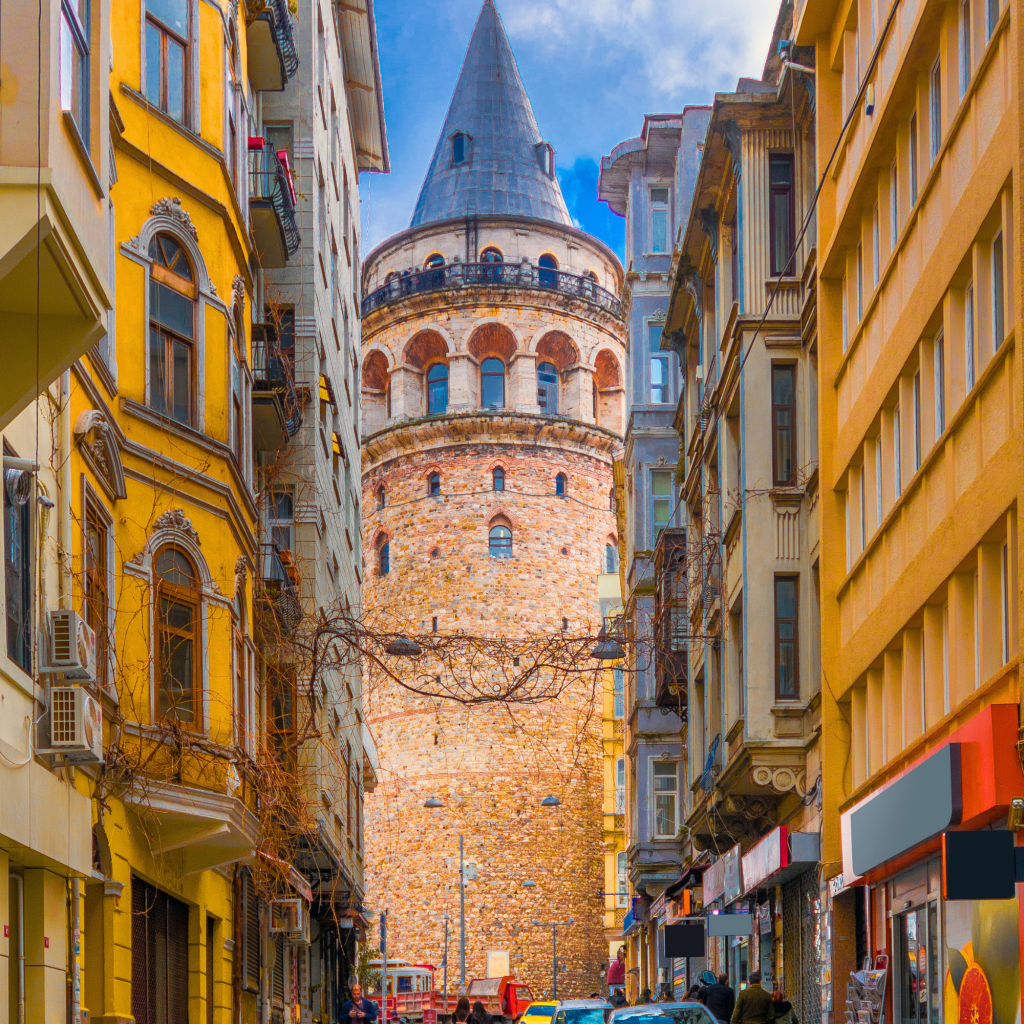
Over time, shifting powers, civilizations, tastes, and functions have given the tower new forms and appearances.
Historical sources suggest that during the Eastern Roman Empire around 500 AD, even if not in its current form, a watchtower or lighthouse may have been built in the area where the tower now stands, as an extension of the defensive walls against the threat of the Huns and Bulgars. After the Genoese took control of Pera (Galata) through political maneuvering in the 1300s, the walls and towers, including the Galata Tower, were rebuilt or repaired. The current foundations were laid in 1348. Due to the cross once mounted at the top, it was also known as Christea Turris (Tower of Christ) and became a symbol of the small Latin community in the East.
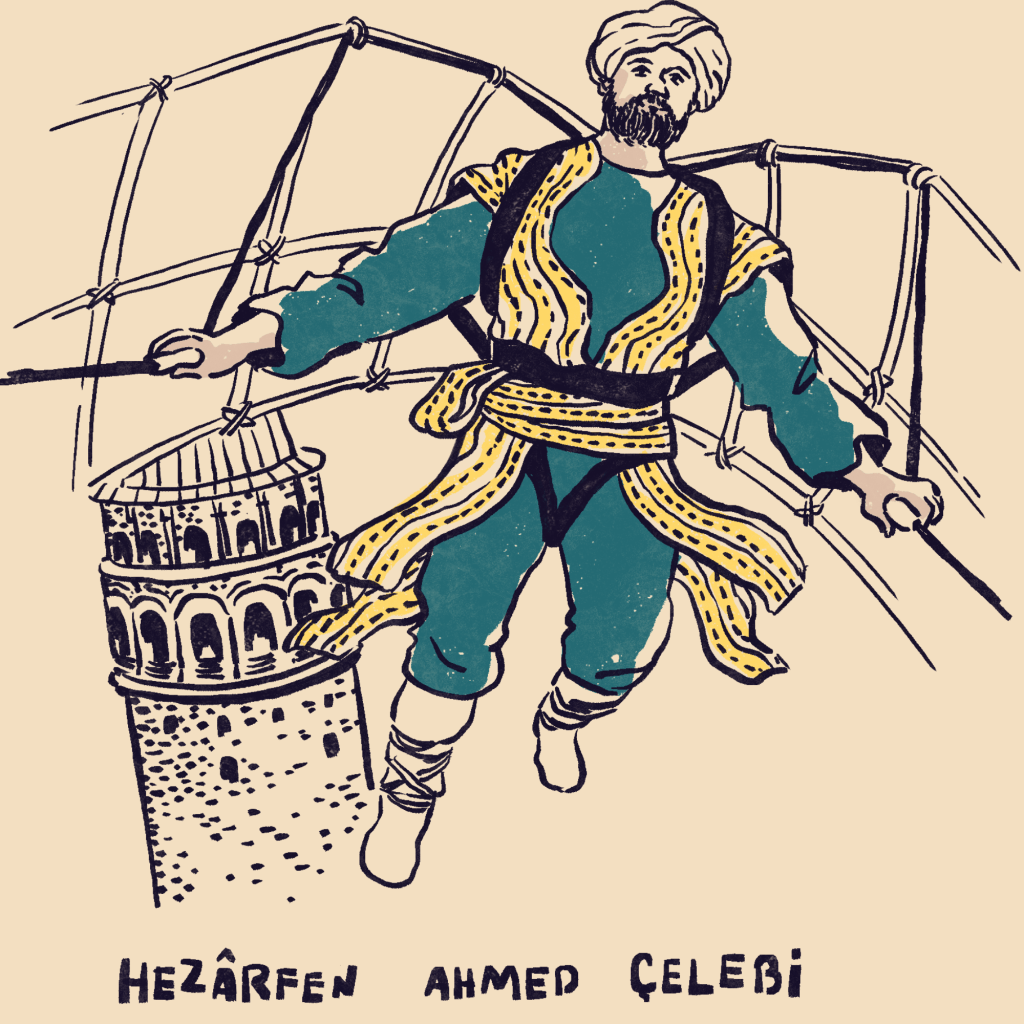
The tower suffered significant damage in the great earthquake of 1509, known as the “Little Judgment Day” (Küçük Kıyamet), and was rebuilt from the second floor (13.20 meters high) by architect Murad bin Hayrettin, under Sultan Bayezid II. During the reign of Suleiman the Magnificent, it was used as a prison. Under Sultan Selim II, it was repaired after fires, and during the reign of Sultan Murad III, it briefly served as an observatory. In the time of Sultan Murad IV, it witnessed Hezarfen Ahmed Çelebi’s legendary flight to Üsküdar.
In 1717, a communication system was established in the tower using drums (kös) to alert the city to frequent fires. Evliya Çelebi’s Seyahatname (Book of Travels) contains a paragraph about the tower, considered the first Turkish observational record. According to the historian Inciciyan, in a major fire in 1794, the tower’s wooden cone and upper floors were completely destroyed. The tower was then restored by Sultan Selim III, and engravings by the court architect Antoine-Ignace Melling and records in the historian Cevdet Pasha’s work confirm the new design: four projecting balconies around the panoramic floor, and three rooms with a central hall inside. Poems by Ayıntaplı Ayni and Vahidi also document this restoration, providing a reliable basis for restitution studies. This version of the tower remained until another fire in 1831.
After the 1831 fire, Sultan Mahmud II had the upper section (above 32.60 meters) demolished and rebuilt in the Empire style with 14 large masonry arches forming a panoramic gallery. Above that, a wooden cone was added at 40.04 meters. However, this cone was blown away in a violent storm in 1875. It was replaced with two octagonal observation floors, which did not match the original architecture, and a terrace was built at a height of 51.65 meters.
This appearance lasted until 1964. By then, the wooden structures above 32.35 meters had decayed, and cracks had formed in the tower’s walls and arches, making it dangerous.
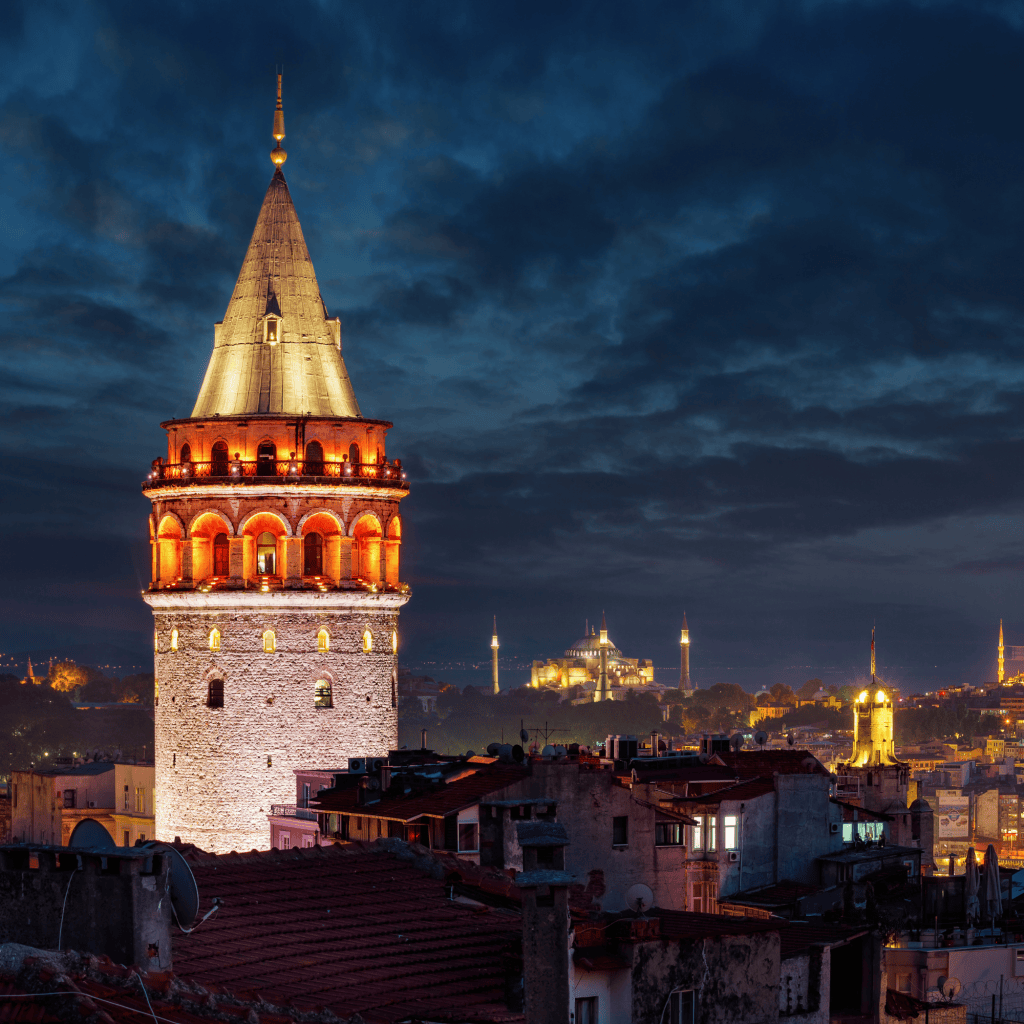
Restoration and the Modern-Day Galata Tower
The tower, which had been used for fire spotting and later as a naval communication post, was closed to the public. Between 1964 and 1967, it underwent structural reinforcement and restoration and was reopened.
The tower was restored again in 2020. During the months of May to August, due to nesting swifts (a type of migratory bird), exterior restoration could not be completed. Instead, interior restoration was carried out to avoid disrupting the birds’ habitat. The Galata Tower continues to function as a museum with updated features. However, issues with the outer façade and the cone roof have worsened over time, leading to urgent intervention due to dangerous material detachments.
Enhanced safety measures have been implemented for both visitors and the surrounding area.
Hezarfen Ahmed Çelebi: The Flight from Galata Tower
Here’s a small interesting fact:
Hezarfen Ahmed Çelebi, the famous Ottoman scholar and inventor, carried out his most well-known experiment in 1632. His flight from the Galata Tower is considered one of the most significant events in aviation history. Equipped with wing-like apparatuses, he launched himself from the 300-meter-high tower and glided approximately 3 kilometers to the shores of Üsküdar.
The flight caused great excitement in its time.
Galata Tower Travel Tips
If you like, you can have dinner around Galata Tower. There are some wonderful places in the area, and we’ll be ending the day with a view of Galata Tower.
You can also relax at one of the cafés facing Galata Tower. If you’re tired or it’s too crowded to go up the tower, you can always visit it during the day instead.
IMPORTANT: The Museum Pass is valid. However, for night museum visits, you need to purchase an additional ticket.
Link: Night Museums of Istanbul
We recommend checking out our audio tours to discover the interesting and fun stories of Hagia Sophia, the Million Stone, the Hagia Sophia Water Tower, the Blue Mosque, and the Hippodrome.🎧


Leave a Reply