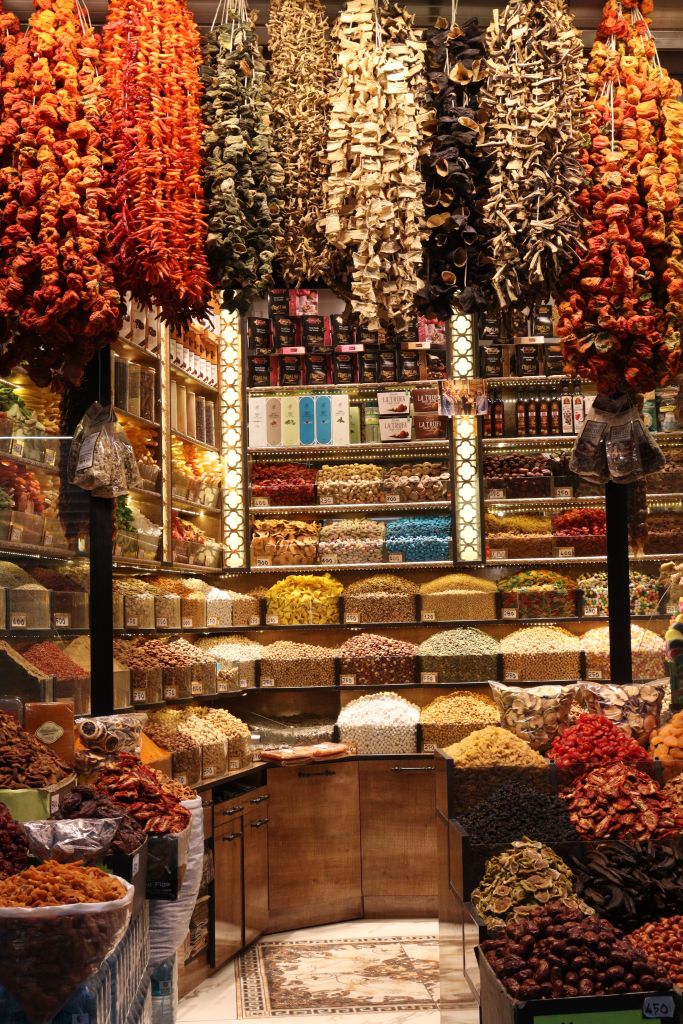
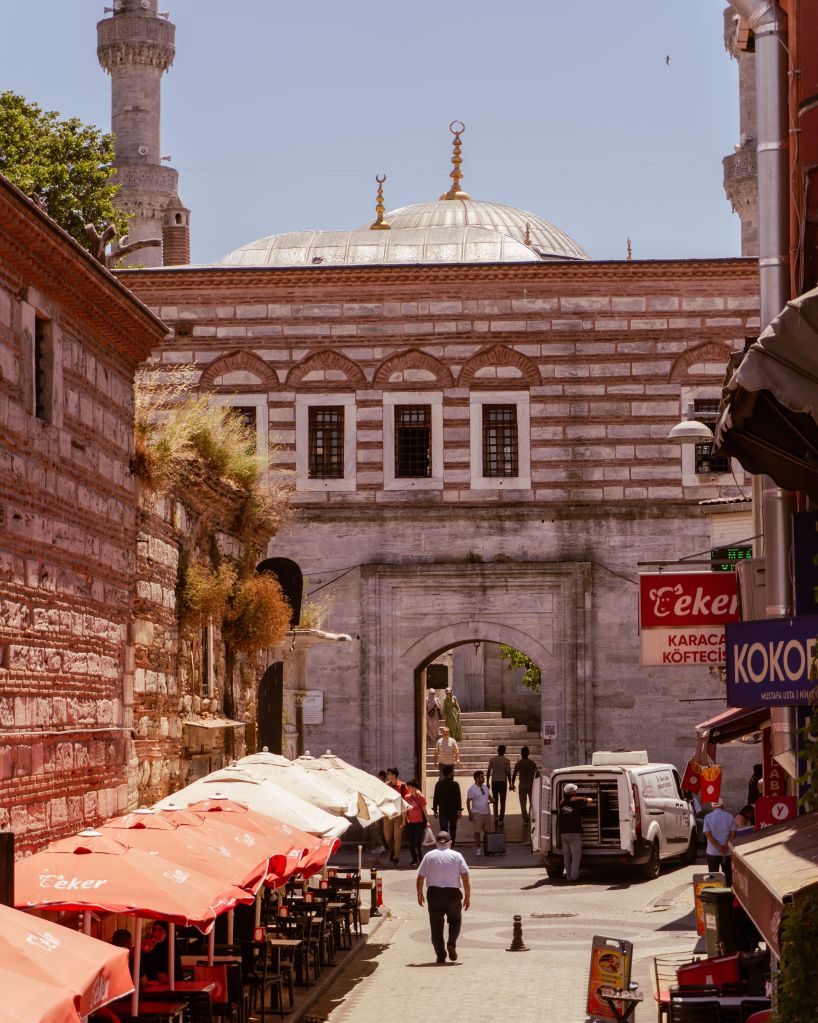
The Spice Bazaar (Mısır Çarşısı), one of Istanbul’s most important historical and touristic commercial centers, was built as part of the New Mosque (Yeni Cami) complex to help cover the mosque’s expenses. Construction began in 1660 under the order of Sultan Mehmed IV’s mother, Turhan Sultan, and was initiated by Chief Imperial Architect Kâzım Ağa. It was completed in 1664 by Chief Imperial Architect Mustafa Ağa.
Why Is It Called the “Egyptian Bazaar”?
In the 17th century, historians referred to the bazaar as the “New Bazaar” or the “Valide Bazaar.” However, since it was funded by taxes collected from Egypt and many of the goods and spices sold there came from Egypt, it came to be known as the “Egyptian Bazaar” (Mısır Çarşısı) starting in the mid-18th century.
Unique Architecture and Symbolic Signs
In the shops, the front area typically featured a wooden counter, while the back housed a storage space or workshop. Some shops displayed symbolic signs on their eaves—such as a fire tower, boat, ostrich egg, scissors, or tassel—that represented the shop and helped customers identify them easily.
Surviving Centuries of Change
The Spice Bazaar has suffered two major fires in its history. With a history spanning nearly 400 years, it underwent restoration between 1940–1943 and again from 2015–2018. In 1941, a road was constructed through the courtyard of the New Mosque, separating the bazaar from the mosque.
The Bazaar Today
Today, the Spice Bazaar welcomes thousands of local and international visitors daily. It is still home to shops selling a wide variety of spices and Turkish delight, as well as jewelry and souvenir stores.


Leave a Reply