First, let’s make one thing clear. The first floor of Hagia Sophia, which is the main prayer area, is closed to visitors. Only Turkish citizens can enter this area. The upper floor, or gallery level, is open to visitors. You can also see the lower floor from the upper level. In our opinion, the view is even better from up there!
The entrance to the upper floor is quite close to the entrance of Topkapı Palace. When you arrive in front of Hagia Sophia, turn your back to Hagia Sophia and continue to the left. You will see the ticket booths right away.
By the way, please go early in the morning. Don’t let the crowds test your patience. Listen to us on this one: be at the ticket booths by 8:30 AM. 😉
At the ticket booth, they may also ask if you would like to buy a ticket for the Hagia Sophia History and Experience Museum. This museum tells the story of Hagia Sophia’s creation step by step through visual displays. At the end, you can also see some valuable objects, almost like an exhibition.
As of 2026, the Hagia Sophia entrance ticket costs €25, while the Hagia Sophia History and Experience Museum costs another €25. Together, they cost €50.
Funİstanbul Guide already tells you the story of Hagia Sophia in detail. We don’t have moving videos or flashy visuals, but we have your imagination and carefully prepared images to help you picture the stories. The choice is yours. 🙂
So, let’s continue. What should you absolutely see inside Hagia Sophia? Which details are waiting for you? And is it really worth €25?
Let me answer that right away: yes, it really is worth it. Don’t worry. You won’t regret it.
In this article, we’ll tell you about three important things you should see and look at carefully.
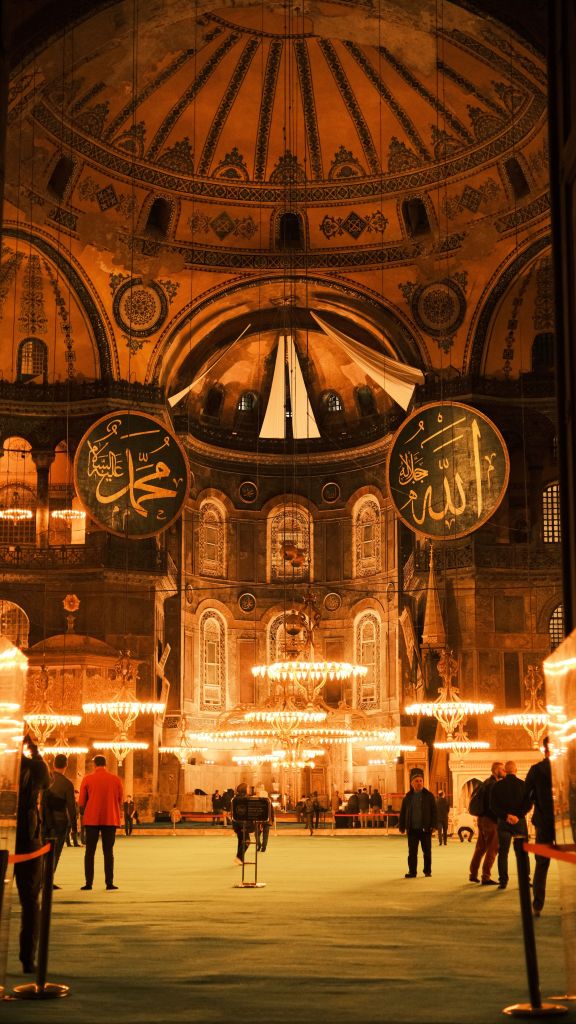
1. The Great Dome
The dome stretches an impressive 55.6 meters high, with a 31-meter diameter.
In other words, this is absolutely mind-blowing engineering. A huge amount of effort went into creating this dome. There were countless attempts and calculations. But there were also things that were overlooked and some very big mistakes were made.
Here’s an interesting fact for you.
Justinian I, the man behind the vision for Hagia Sophia, wanted this church to be completed very quickly. Hold on to your seat: using the technology of 1,500 years ago, the construction of the church was completed in about 5 years and 10 months.
But was it really finished?
Well, that’s another story.
In our Funİstanbul Guide Audio Tour, our local storyteller brings this story to life in an enjoyable, easy-to-follow way. 🙂
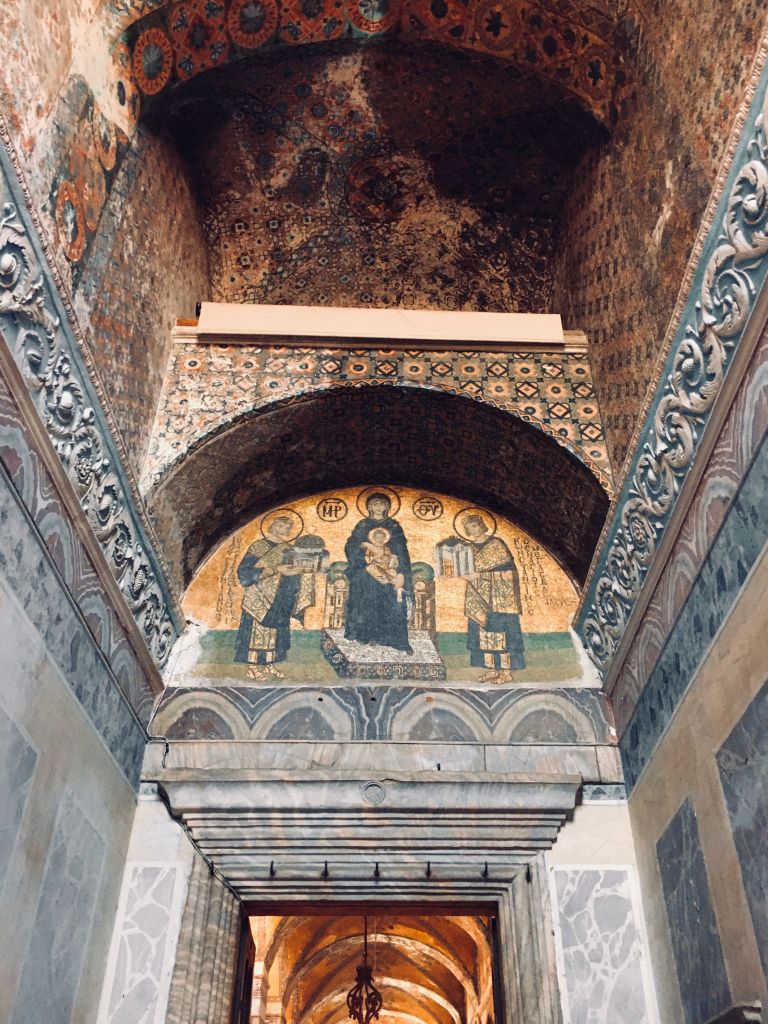
2. The Byzantine Mosaics
The mosaics are just as incredible as the construction of the dome.
Can you imagine it? Tiny pieces of glass were carefully placed one by one, and each face has its own expression. The expressions are so lively and full of movement that when you look at the mosaics, you can actually feel the emotion.
It’s amazing.
In a way, there is a form of communication happening through these images.
So, how were these mosaics made?
Byzantine artists used gold tesserae — small pieces of glass with gold leaf inside — to create a luminous, almost divine effect. These tesserae were made by placing a thin layer of gold leaf between two layers of glass and then cutting them into small pieces.
3. The Mihrab & Ottoman Additions
Yes, Hagia Sophia was once a church and later became a mosque. Most people know this.
In 1453, the Ottoman Empire conquered Constantinople and took Hagia Sophia as well. Instead of destroying the church, they transformed it into a mosque by adding Islamic elements both inside and outside the building.
So, what were these additions?
First, there are the tall towers outside called minarets. We talk about their function in our Hagia Sophia tour, but we go into even more detail with some very interesting stories during our Blue Mosque Journey. We definitely recommend not missing that one.
Then there was another important need.
Because Muslims pray facing a specific direction, a mihrab was needed. A minbar was also needed for the sermon given on Fridays.
But what about the eight enormous Ottoman calligraphy plaques?
How were they made?
And how did they even get inside the building?
You’re curious, aren’t you? 🙂
Here’s something we can share with you in this article:
There are eight monumental round plaques, each about 7.5 meters in diameter, making them among the largest works of Islamic calligraphy in the world. They were created in the 19th century by the famous calligrapher Kazasker Mustafa Izzet Efendi.
Ottoman calligraphy, or Hat Sanatı, required extraordinary skill and was highly valued.
More of this article is coming soon. Don’t worry. 🙂
Want to discover the stories behind these details while you explore? Our Hagia Sophia Audio Tour lets you experience the site at your own pace, with human narration, original music, soundscapes, images, and a hand-crafted route map.


Leave a Reply