History and Origins of Ebru
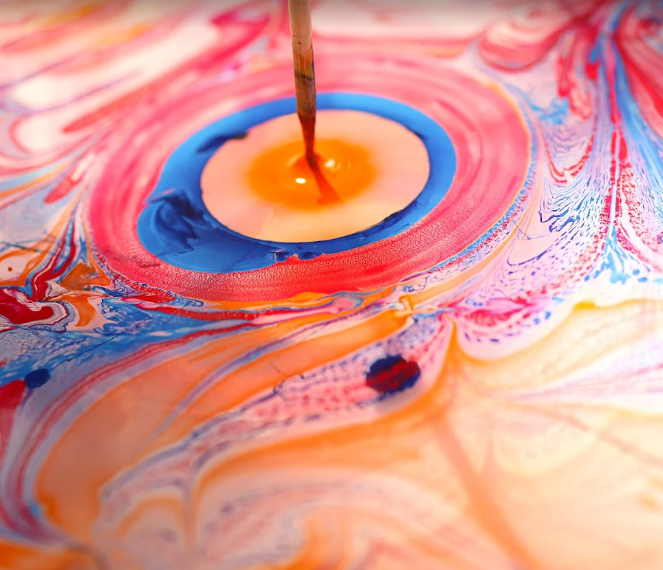
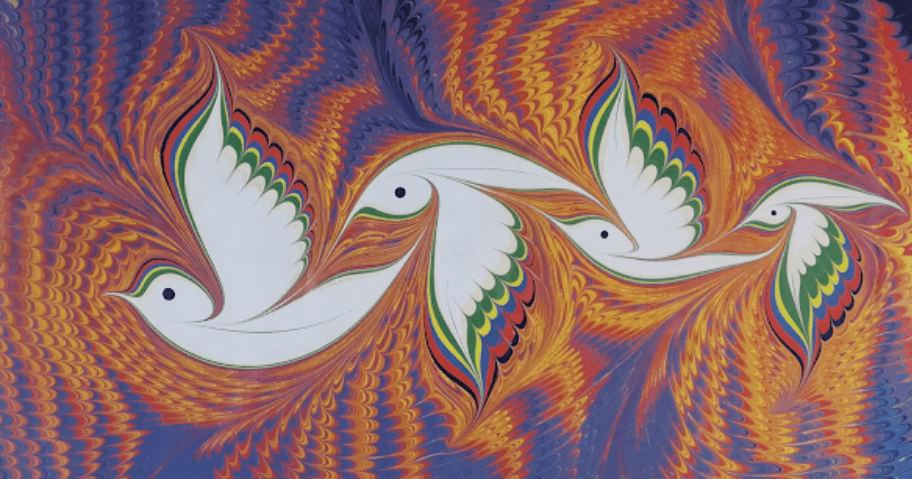
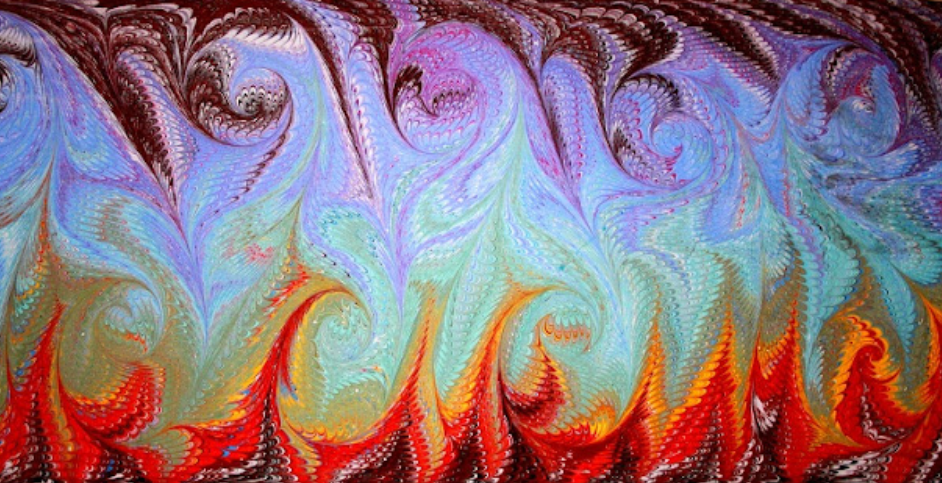
Ebru is a decorative art made by transferring patterns created with specially prepared paints on water thickened with tragacanth onto paper.
The exact time and place where the art of Ebru began is not definitively
known. However, there are some sources indicating that it was practiced in the 13th century in Turkestan, Samarkand, and in the 14th century in the Herat region in eastern Iran. Like paper, Ebru spread from east to west using the Silk Road and other trade routes.
The oldest historically verified Ebru dates back to the year 1447 and is
located in Topkapi Palace. Many Ebru artists were trained during the Ottoman
period. During this time, Ebru papers were used as backgrounds for state
documents and official correspondences.
The main purpose here, in addition to
aesthetic values, was to prevent forgery; the logic behind the complex
patterns on today’s checks, promissory notes, and paper money is based on
this.
Ebru art is one of the oldest Turkish paper decoration arts.
In the Chagatai language of Central Asia, the word “Ebre,” meaning “like a
snake, veined,” is the earliest known name of the Ebru art.
Currently known in Europe as ‘Marbling,’ Ebru was introduced to Europe in the 17th century under the name “Turkish paper.”
Cultural Significance and Artistic Value
In Turkiye, besides bookbinding art, Ebru was used as backgrounds and borders in calligraphy art. As calligraphy spread in art studios, the patterned paper used in the background also gained value and was even framed as an artwork.
Besides its visual elegance, Ebru offers us interesting beauties from micro
and macro worlds that the naked eye cannot see. Additionally, it is an
undisputed fact among enthusiasts that Ebru has therapeutic properties.



 Funİstanbul: Fun-Filled Istanbul Travel Blog
Leave a comment