Ready to hop on a time machine and travel to a place where history, culture, and beauty collide? Let’s do it!
Istanbul. The City of Seven Hills! It’s like a piece of magic wrapped in history, perched on those iconic seven hills, just like its ancient sibling, Rome. But Istanbul’s got its own flair! It’s not just one city; it’s got two personalities. On one side, you’ve got the Asian side (the Anadolu Yakası) chilling with the Anatolian Peninsula, and on the other, the European side (Avrupa Yakası) doing its thing between the Black Sea and the Aegean. Talk about a perfect blend of East meets West!
Istanbul’s like that cool friend who’s always the center of attention. With over 15 million residents and a stream of tourists flocking in from every corner of the globe, it’s no wonder it’s a favorite! By 2024, Istanbul welcomed over 18 million foreign tourists, surpassing the 17.4 million recorded in 2023. More than ever, visitors are walking its streets, soaking in the charm of this vibrant city.
But wait… there’s one spot that’s totally unforgettable: Hagia Sophia. I mean, where else can you see the perfect mix of Byzantine splendor and Ottoman grandeur?
Let’s take a little imaginary journey, shall we?
Let’s imagine! We’re wandering through the mesmerizing streets of Istanbul, catching glimpses of the rich history, and letting ourselves get swept up in the beauty of Hagia Sophia. Sounds dreamy, right? 😍
So, let’s go explore the wonders of Istanbul together! Ready? Let’s dive into the heart of this magnificent city!
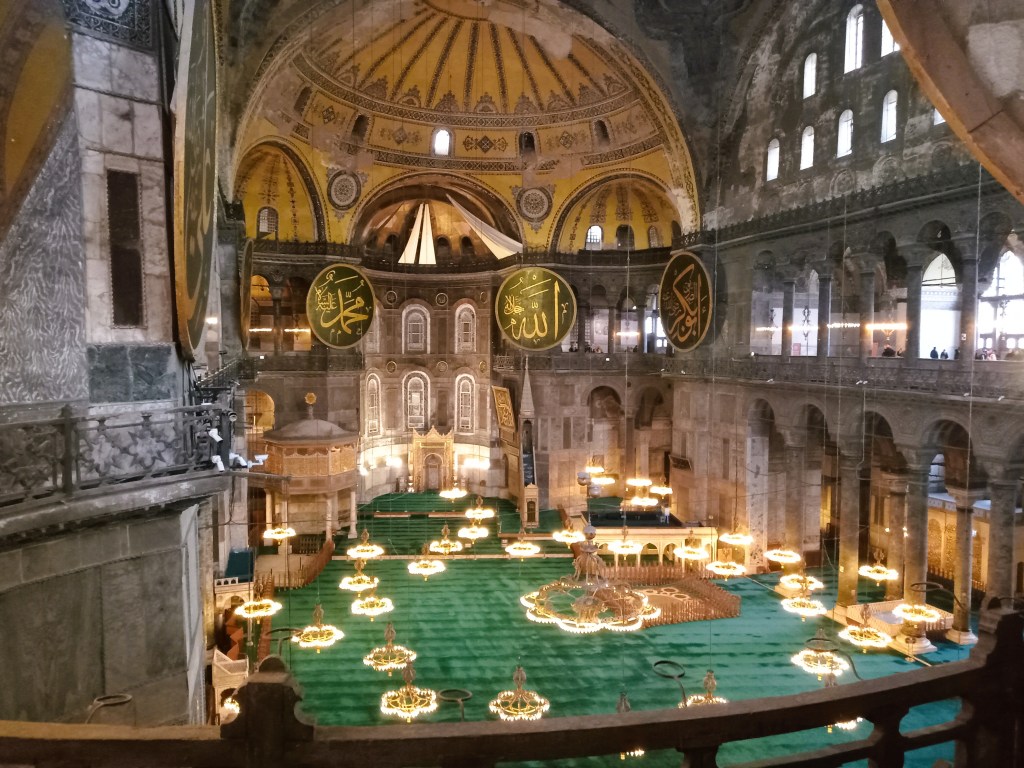
The Hagia Sophia Mosque is the perfect place to start your journey on the historical peninsula of Istanbul. Sharing the same name as the famous religious site, Hagia Sophia was completed in its current form in 537 AD.
In fact, Hagia Sophia has witnessed some of the darkest periods in history, from the Latin invasion to the conquest of Istanbul. After being destroyed twice, the third version of Hagia Sophia was built but suffered destruction and neglect over centuries due to wars, rebellions, and construction errors. However, it survived constant threats of destruction until Fatih Sultan Mehmet Han conquered Istanbul.
After the conquest, it was converted into a mosque and served as one for 481 years. In the 1930s, restoration work began, and it was closed to the public.
Later, on November 24, 1934, it was turned into a museum by a decision of the Council of Ministers. On July 10, 2020, the Council’s decision was revoked, and under Presidential Decree No. 2729, signed by President Recep Tayyip Erdogan, Hagia Sophia was reopened as a mosque.

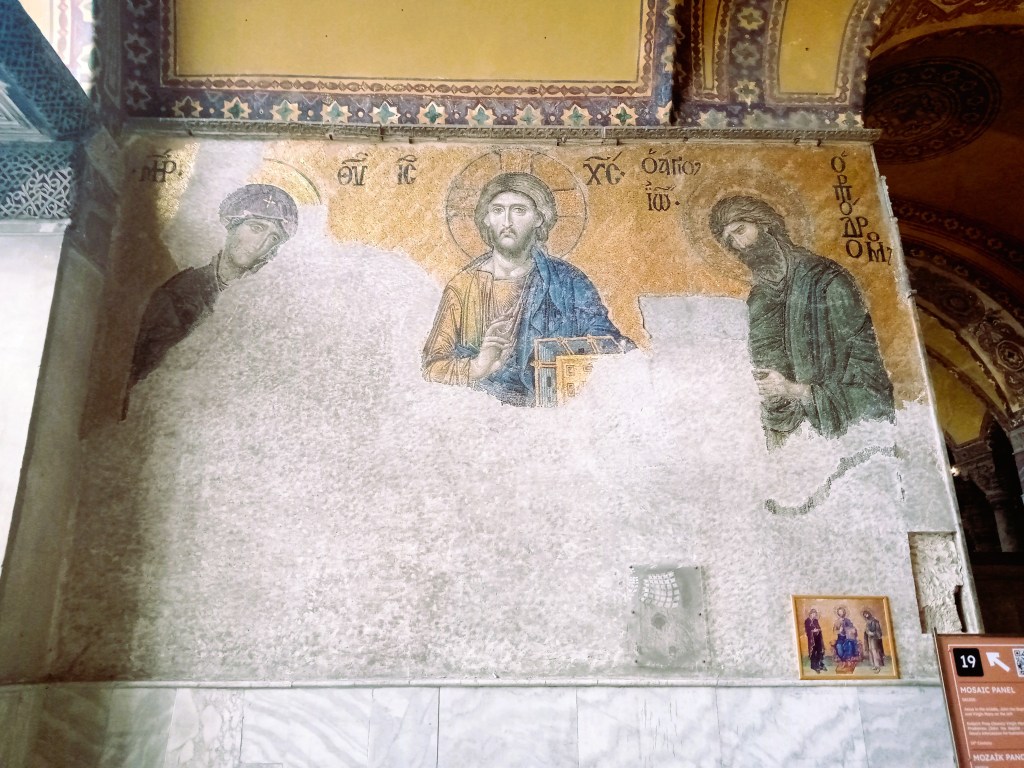
Legends of Hagia Sophia
- The name of Hagia Sophia is quite interesting. Once considered the largest church in the city, it was initially known as “Megali Ecclesia,” which means “Great Church.” Eventually, it became known as Thea Sophia. By the 5th century, the name changed to Hagia Sophia, meaning “Holy Wisdom.”
- The cathedral’s restoration after a major earthquake in the 14th century was funded by taxes collected from the people, and it reopened as a church in 1354.
- There’s a story about an angel during the construction of Hagia Sophia. The workers had to leave someone to guard the site during lunch. The youngest worker was chosen to stay behind. While waiting, a figure suddenly appeared and told the worker that it was time for the laborers to return. When the young worker said he couldn’t leave, the figure offered to guard the site instead. Later, when the worker described the encounter to his colleagues, they realized the figure was an angel, tasked with protecting Hagia Sophia forever.
- The Emperor’s Door legend tells that during the conquest of Istanbul, as Fatih Sultan Mehmet Han approached Hagia Sophia, priests were frying fish near the door. Realizing that Istanbul would soon fall, the fish miraculously jumped out of the pan and turned to stone.
5. When Hagia Sophia was converted from a church into a mosque, Islamic elements were added to the structure, including inscriptions of the names of the Four Great Caliphs.
6. One of the mysterious features of Hagia Sophia is a priest who disappeared with the Holy Grail during the conquest of Istanbul. Just as the priest was preaching, he fled through one of the doors with the Grail. The door closed behind him and became a wall. According to legend, the priest still resides there with the Holy Grail.
7. The Wishing Column in Hagia Sophia is associated with the Virgin Mary. It is said that when Mary heard of Jesus’ torment, she leaned on a pillar in her home and cried, her tears carving into the stone. This sacred column was later requested for the church’s construction, and today it draws visitors who make wishes by placing their fingers in a hole in the stone.
8. The mysterious door of Hagia Sophia holds many divine messages. The most prominent is the one to the south. It is said that the prophet Hızır inscribed the date of the world’s end on this door. According to the inscription – 18th day of the year 1038, Sunday – this is recorded as the end of the world.
9. The dome of Hagia Sophia is said to be exceptionally sturdy, and it holds a secret. When the dome was built, priests wanted to place the bones of ancient prophets within the structure. Taking their advice, the emperor brought these bones from Arab lands and incorporated them into the dome. According to legend, this feature will keep Hagia Sophia strong forever.
You’ve seen a little. Now come see it all! We saved you a front-row seat.
Grab a Story with Funİstanbul Guide → https://funistanbulguide.com/
 Funİstanbul: Fun-Filled Istanbul Travel Blog
Leave a comment